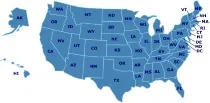
When Michael Farris and Michael Smith founded Home School Legal Defense Association in March of 1983, home schooling was just a tiny blip on the education radar screen. The concept of parents teaching their children at home was relatively obscure, and the families who chose to follow this non-traditional education route were fairly certain to face opposition from the educational bureaucracy and following legal entanglements, as well as from their own friends and family.
When most people think of homeschooling, they automatically think of a large family. A family with at least five or six kids and a mom in a denim jumpsuit that has everything organized like a well oiled machine. While that stereotype still exists in some families, homeschoolers come in all shapes and sizes including a large number of families who now homeschool an only child.
Over two thousand years ago, Socrates told us that if someone started charging money for teaching the youth things that are well known to virtually every adult in the society, it would be fraud. Today, that fraud is well established in our country. Schooling has been taken over and adulterated by government for political purposes and enforced by laws of compulsion. It has been corrupted by teacher unions that keep well educated people out of the public schools by requiring the teachers to be not only "certified" but union members. Those requirements guarantee that only mediocre caliber people will work in the government-run schools.
From phonics to physics, the Robinson Curriculum offers 22 CDs and a set of Saxon math books, with the promise that these are all that you need to give your children a superior education. You can use this curriculum to supplement your children's current schooling or as a stand-alone education using the included self-study methods.
When parents are considering homeschooling, they need to count the cost because there are many expenses to consider when contemplating educating their children. The costs are not just financial, but also emotional and physical.
Success in school--and in life--requires an active and independent mind. It would be nice if that came easily, but quite the opposite is true. And what's worse is that today, without realizing it, we are training and encouraging our children to become just the opposite--passive. As parents, we can teach our children social skills. This is not the job of our schools.
This list is for the buying and selling of resources (biographies,poetry and art books, teacher resources, etc.) that are in conformity with the Charlotte Mason "twaddle-free" philosophy. This is strictly a buying and selling list.